The Magic of the Mundane: Why Mixtape Finds Its Fantasy in the Heart of California.
Mixtape Game Review: A Musical Coming-of-Age Adventure About Friendship, Memory, and the Songs That Shape Us
Meta Description: Discover why Mixtape is one of the most unforgettable story-driven games, blending coming-of-age drama, licensed music, emotional gameplay, teenage friendship, nostalgia, and cinematic adventure into a unique indie game experience.
Mixtape is not just a video game about music. It is a story about growing up, leaving home, losing innocence, and remembering the moments that made youth feel endless. Developed by Beethoven & Dinosaur, the studio behind The Artful Escape, this narrative adventure uses licensed songs, surreal gameplay, and heartfelt storytelling to create one of the most emotional indie games in recent memory.
At its core, Mixtape follows three teenagers: Stacey, Cass, and Slater. The story takes place on Stacey’s final night in a small town before she leaves for New York to chase her future. That setup may sound simple, but the game turns it into something much larger. It becomes a final ride through memory, friendship, regret, rebellion, and the kind of emotional chaos that only makes sense when you are young.
Instead of telling its story through long explanations or traditional cutscenes, Mixtape builds its identity around music. Songs are not background decoration. They are the emotional structure of the game. They shape the pacing, mood, movement, and memories of the characters. The result is a game that feels less like a standard narrative adventure and more like playing through a perfect old mixtape made by someone who remembers every mistake, every laugh, and every goodbye.
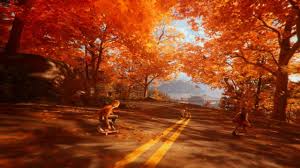
A Story About the Last Night Before Everything Changes
The best coming-of-age stories often happen at a turning point. Mixtape understands this clearly. Stacey is about to leave her small town, and that departure creates a powerful emotional tension. She is excited about the future, but the people and memories she leaves behind still matter. Cass and Slater are not just side characters. They represent the friendships, arguments, inside jokes, and shared history that make leaving difficult.
This is why the game feels so relatable. Most people remember a night when life felt like it was about to change forever. Maybe it was after graduation. Maybe it was before moving to a new city. Maybe it was the last time a group of friends felt complete before everyone went in different directions. Mixtape takes that feeling and turns it into an interactive journey.
The game is not interested in huge world-ending stakes. Its drama is personal. A betrayal can feel catastrophic. A song can feel life-changing. A small town can feel like the center of the universe. That emotional scale is exactly what makes teenage life so intense, and Mixtape captures it with surprising honesty.
Music Is the Heart of the Game
The soundtrack is one of the biggest reasons Mixtape stands out. The game features music from iconic artists such as Devo, The Smashing Pumpkins, and The Jesus and Mary Chain, giving the experience a strong sense of identity. These songs are not randomly placed for nostalgia. They are carefully used to guide the feeling of each scene.
Some games use music to support gameplay. Mixtape uses gameplay to support music. The rhythm of the story often feels shaped by song structure. Quiet moments feel like verses. Emotional peaks feel like choruses. Strange dreamlike sequences feel like instrumental breaks where the characters are pulled into something larger than reality.
This approach makes the game feel cinematic, but not passive. Players are not simply watching a soundtrack-driven story. They are moving through memories that bend, expand, and transform under the power of music. A normal street can become magical. A painful moment can become surreal. A teenage feeling can suddenly fill the whole screen.
Gameplay Built Around Emotion
Mixtape is not designed like a traditional action game, RPG, or puzzle adventure. Its mechanics are more expressive than competitive. The game is focused on making players feel what the characters feel.
That means some gameplay moments are simple by design. A scene about heartbreak does not need complex controls to be powerful. A memory about friendship does not need enemies or fail states to matter. Instead, the game asks a more interesting question: how can regret, betrayal, joy, or freedom become something the player can experience physically?
This is where Beethoven & Dinosaur’s style becomes clear. Like The Artful Escape, Mixtape is interested in the emotional power of performance, music, and imagination. But where The Artful Escape explored what it means to become a performer, Mixtape focuses more on what it means to be a listener. It is about the way music transforms ordinary life into something mythic.
Teenage Friendship Without Fake Perfection
The friendship between Stacey, Cass, and Slater gives the story its emotional center. These characters are not written as perfect symbols of youth. They are passionate, messy, funny, dramatic, and sometimes unfair to each other. That makes them feel believable.
Teenage friendship often feels larger than life because everything is still being discovered for the first time. Your favorite band can become your identity. A disagreement can feel like a betrayal. A single night with friends can become a memory you carry for decades. Mixtape understands that emotional exaggeration is not false. It is exactly how being young can feel.
The game also understands the innocence of fandom. The characters love music in the way teenagers often do: completely, obsessively, and without irony. They judge the world through songs, bands, posters, shows, and shared taste. That detail gives the game a strong sense of cultural texture and makes its nostalgia feel earned.
A Small Town That Feels Like a Memory
The setting of Mixtape is not meant to feel like a realistic map built for endless exploration. It feels more like a remembered place. Streets, cars, houses, and landmarks appear through the emotional lens of the characters. This gives the world a dreamlike quality, as if the town is being rebuilt from memory rather than documented with perfect accuracy.
That choice fits the story. Memories are not clean recordings. They are distorted by feeling. A boring road can become legendary if the right song was playing. A normal night can become unforgettable if it happened before goodbye. Mixtape turns that idea into its visual and narrative style.
Why Mixtape Stands Out Among Story-Driven Games
There are many narrative games about youth, memory, and friendship, but Mixtape stands out because it does not treat music as decoration. It treats music as the language of memory. The game understands that people do not always remember exact conversations from their teenage years, but they remember the song playing in the car, the album that made them feel understood, or the track that turned a normal night into a defining moment.
This gives the game a strong identity in the indie game space. It is ideal for players who enjoy emotional storytelling, cinematic games, music-driven experiences, and coming-of-age drama. It may also appeal to fans of games that value mood and memory over combat or complex systems.
Final Verdict
Mixtape is a heartfelt, stylish, and deeply musical coming-of-age adventure. It tells a story about friendship, leaving home, teenage intensity, and the songs that become attached to the biggest moments of our lives. Its licensed soundtrack gives the game emotional power, but its characters and themes are what make that music matter.
For players looking for a story-driven indie game with nostalgia, emotional gameplay, cinematic presentation, and a soundtrack that feels central to the experience, Mixtape is one of the most memorable games to watch. It is not about saving the world. It is about remembering the night before your world changed forever.
- SEO Keywords: Mixtape game review, Mixtape video game, best indie games, story-driven games, coming-of-age games, music games, narrative adventure games, emotional indie games, Beethoven and Dinosaur, The Artful Escape developer, licensed soundtrack games, best adventure games 2026