
Lego Voyagers Review: Embracing the Brick’s Purity, Navigating Its Digital Faults










Popular Now
 Roblox
 Toca Boca World
 Poppy Playtime
 NBA 2K24
 Candy Crush Saga
 BeamNG.drive
 Free Fire Max
 Fortnite
 CarX Street
 Black Myth: Wukong
 In the vast and ever-expanding universe of video games, few franchises hold the nostalgic and creative weight of Lego. With each new digital iteration, players and critics alike scrutinize whether the game truly captures the essence of the physical bricks that have shaped generations of builders. Lego Voyagers, the latest ambitious open-world crafting adventure, boldly steps into this legacy, aiming to deliver an unparalleled experience of digital construction and exploration. From the outset, it’s clear the development team poured their heart into making a game that feels unequivocally Lego. Yet, as with any digital interpretation of such a tangible philosophy, its dedication to the core Lego spirit sometimes leads to unforeseen challenges, presenting a game that is perhaps true to its inspiration to a fault.
Released amidst a competitive landscape of creative sandbox titles, Lego Voyagers enters the fray with a promise of boundless imagination. The game casts players as intrepid explorers embarking on a grand journey across procedurally generated worlds, each teeming with unique biomes, creatures, and, crucially, an infinite supply of digital Lego bricks. The core gameplay loop revolves around discovery, resource gathering, and intricate building, all rendered with the distinctive charm and visual language synonymous with the Lego brand. High-CPC keywords such as creative sandbox game, open-world exploration, and digital building mechanics are not just buzzwords here; they are the very fabric of the experience.
The Unmistakable Lego DNA: Creativity Unleashed
What truly defines the ‘Lego spirit’? It’s a blend of unbridled creativity, accessible design, a touch of playful humor, and the sheer joy of bringing imagined structures to life, brick by brick. Lego Voyagers captures this essence with remarkable fidelity. Players are immediately handed the tools to construct virtually anything they can conceive, from sprawling bases and intricate vehicles to whimsical contraptions designed to overcome environmental puzzles. The intuitive building interface, reminiscent of popular voxel-based games but with a distinctive Lego snap, allows for rapid prototyping and elaborate architectural endeavors. The game actively encourages experimentation, rewarding players for thinking outside the box and utilizing their brick palette in novel ways.
Exploration is another cornerstone. Each world visited in Lego Voyagers feels distinct, offering new challenges and resources. Discovering ancient ruins built from colossal Lego elements, encountering quirky brick-built flora and fauna, and unearthing hidden blueprints imbue the journey with a genuine sense of wonder. The character customization options are robust, enabling players to create their unique minifigure avatars, replete with classic Lego expressions and an array of accessories. This level of personalization reinforces the player’s connection to their digital persona and their journey, echoing the countless hours spent personalizing physical minifigures. This focus on player creativity and immersive world-building is a significant draw for fans of the genre and the brand.
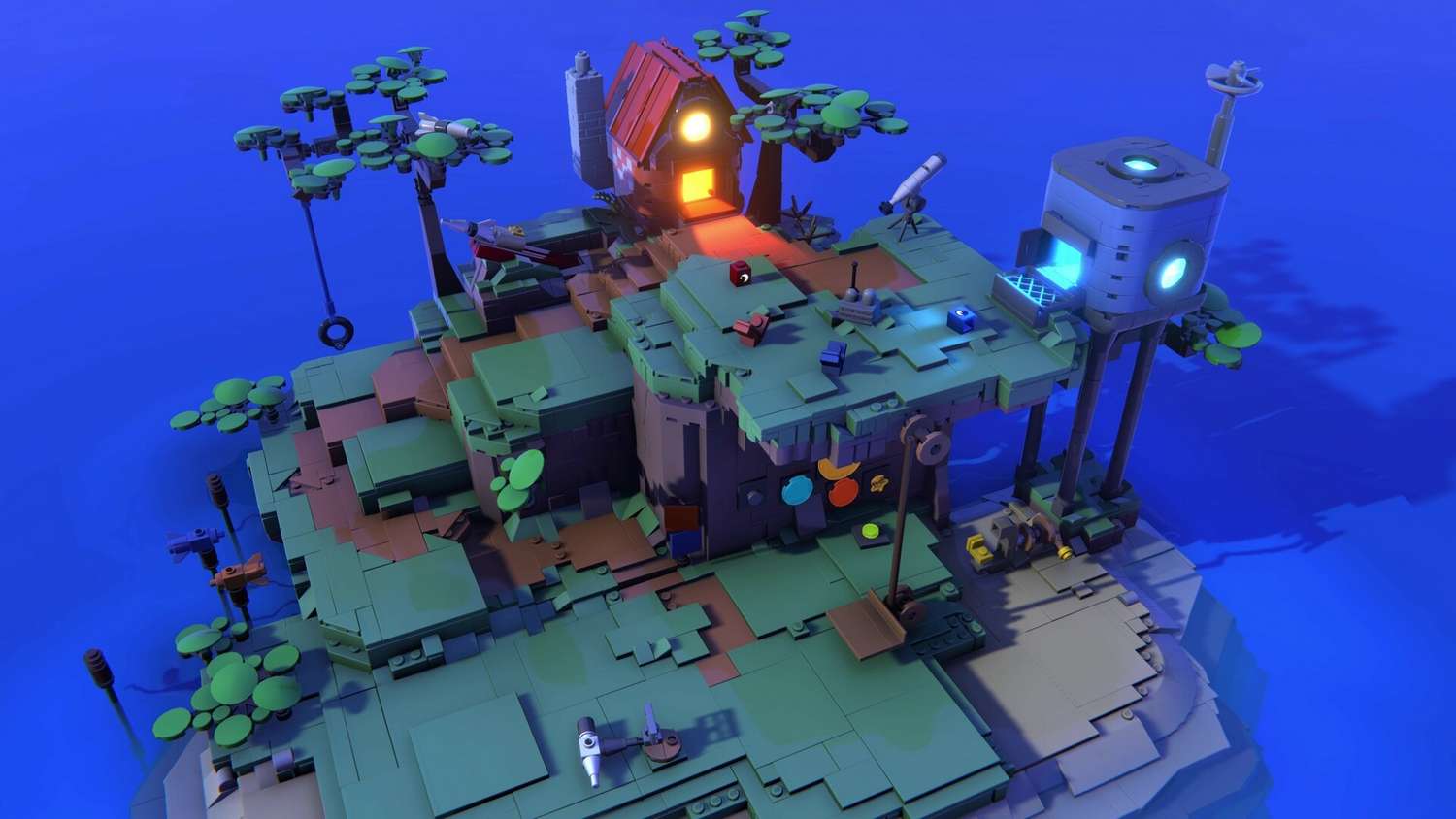 A World of Endless Bricks (Almost): Core Gameplay Loop
At its heart, Lego Voyagers is a crafting and survival-lite game, albeit with a focus on construction rather than harsh survival mechanics. Players collect various types of ‘elemental bricks’—wood, stone, metal, energy—from the environment. These resources are then used at crafting stations to fabricate tools, weapons, structural components, and even complex automated systems. The depth of the crafting system is commendable, offering a progression path that unlocks increasingly sophisticated items and building techniques. The procedural generation ensures that no two playthroughs are exactly alike, providing a fresh canvas for exploration each time a new world is discovered. This dynamic content generation contributes significantly to the replayability factor, a key consideration for long-term gaming engagement.
Quests, often humorous and delivered by charming brick-built NPCs, guide players through the initial stages, teaching them the mechanics and lore of the Voyagers universe. These quests typically involve exploring specific areas, gathering rare resources, or constructing particular structures. While the narrative is light-hearted and often serves as a backdrop for the gameplay, it consistently reinforces the theme of discovery and collaboration. The implementation of co-operative multiplayer further enhances the experience, allowing friends to build and explore together, which is a powerful embodiment of the shared play experience that defines physical Lego bricks. For those seeking a family-friendly gaming experience with substantial depth, Voyagers presents a compelling option.
Where Purity Meets Pitfalls: The ‘To a Fault’ Conundrum
However, it is in its staunch adherence to the Lego spirit that Voyagers occasionally stumbles. The very simplicity and accessibility that make Lego so beloved can, in a digital format, lead to a sense of superficiality for seasoned gamers. The narrative, while charming, lacks the depth and urgency found in more story-driven titles. Quests, while varied in objective, can sometimes feel repetitive, falling into patterns of ‘go here, collect this, build that.’ While this is common in sandbox games, the distinct lack of profound consequence or branching pathways can make progression feel somewhat linear in a seemingly boundless world.
Furthermore, the ‘sandbox’ aspect, while vast, can sometimes feel overwhelming without more structured guidance. New players might find themselves adrift in the sheer freedom, longing for more directed objectives or a clearer sense of purpose beyond ‘build anything.’ The combat, while functional and designed to be non-violent in typical Lego fashion, can feel rudimentary, often boiling down to simple button mashing against equally simplistic AI. For players accustomed to complex combat systems and deep skill trees, this might feel like a missed opportunity. Performance on certain hardware, particularly during large-scale construction or in densely populated areas, can also experience occasional framerate dips, hinting at optimization challenges inherent in rendering such dynamic, block-based environments. These points highlight potential areas for improvement in player experience optimization and end-game content development.
Building Beyond the Sandbox: Comparison and Innovation
When placed alongside other prominent sandbox and crafting games, Lego Voyagers carves out its niche. Unlike the survival intensity of games like Minecraft or the sheer exploration scale of No Man’s Sky, Voyagers places a greater emphasis on the joy of construction and playful discovery. It avoids complex hunger or thirst mechanics, instead focusing on the creative flow. This design choice makes it incredibly approachable for younger audiences and casual players, but it might leave those seeking deeper mechanical complexity wanting more. Compared to previous Lego video games, Voyagers sheds the licensed storytelling of titles like Lego Star Wars or Marvel Super Heroes, opting for an original universe that empowers player creation over linear narrative progression. This shift is both its greatest strength and a potential point of contention for fans accustomed to character-driven Lego adventures. The game’s innovation in digital brick play is undeniable, but it comes with a trade-off.
The game’s monetization strategy also warrants discussion. While the core game offers a complete experience, there are cosmetic microtransactions for new minifigure parts and building palettes. While purely optional and non-pay-to-win, their presence in a game built on creativity raises questions about the balance between encouraging player expression and the commercial aspects of the gaming industry. Transparency in consumer experience with digital content is paramount.
 Technical Foundations and User Experience
Visually, Lego Voyagers is a feast for the eyes. The vibrant, blocky aesthetic is perfectly executed, making every tree, rock, and creature feel genuinely brick-built. Dynamic lighting and environmental effects enhance the visual appeal, creating stunning vistas during sunrises and sunsets. The sound design is equally charming, with satisfying brick-snapping noises during construction, whimsical creature sounds, and a playful, orchestral soundtrack that perfectly complements the adventurous tone. The user interface is clean and intuitive, making navigation and inventory management straightforward, even for younger players. Controls are responsive and easy to learn, ensuring that players can focus on creativity rather than wrestling with clunky mechanics.
However, the sheer scale of the worlds and the density of player-created structures can, at times, push the limits of current-generation hardware. While generally smooth, moments of significant asset loading or large-scale destruction/creation can introduce minor hitches. These are not game-breaking but can slightly interrupt the otherwise seamless creative flow, an area where ongoing technical refinement will be crucial for enhancing the overall user experience and game performance.
Value Proposition and Longevity
Ultimately, Lego Voyagers delivers on its promise of a vast, creative sandbox experience steeped in the unmistakable charm of Lego. Its commitment to the core tenets of the brand—creativity, accessibility, and playful exploration—is unwavering. For those who relish the idea of building anything they can imagine, exploring vibrant, ever-changing worlds, and doing so with friends, Lego Voyagers offers tremendous value. The game’s procedural generation and co-op features ensure a high degree of replayability, promising countless hours of discovery and construction.
However, players seeking a deep narrative, complex combat, or highly structured gameplay may find its unbridled freedom and simplicity somewhat lacking. It’s a game that demands players bring their own imagination to the forefront, rewarding those who embrace its open-ended nature. Lego Voyagers isn’t trying to be a different game; it’s striving to be the most authentic digital Lego experience possible. In doing so, it excels in fostering creativity but occasionally leaves more conventional gaming desires unaddressed. It’s a pure expression of Lego, for better and, at times, for a touch too simple.