15 Years Later: Why No Developer Dares to Make an RPG Like The Witcher 2 Anymore.
The Witcher 2’s Bold RPG Design Would Be Nearly Impossible to Make in 2026
In an era dominated by massive open-world games, live-service experiences, and billion-dollar development budgets, few role-playing games would dare to make the kind of risky design decisions that The Witcher 2: Assassins of Kings made back in 2011. Even after more than a decade, many gamers and RPG critics still consider it one of the most ambitious fantasy RPGs ever created.
Today, with the gaming industry increasingly focused on safe investments, player retention systems, and monetization strategies, a game like The Witcher 2 feels almost impossible to recreate. Ironically, that’s exactly why the game continues to stand out in 2026.

Modern gamers often search for terms like best RPG games 2026, open world fantasy games, high-end gaming PC RPGs, and story-driven single-player games. Yet despite all the technological advances, many newer titles still struggle to deliver the same level of meaningful player choice that The Witcher 2 offered years ago.
The reason is simple: modern AAA development has become extremely expensive, and developers can no longer afford to create huge amounts of content that many players may never even see.
The Decision That Changed RPG Storytelling Forever
The defining moment of The Witcher 2 happens near the end of its first act. Players controlling Geralt of Rivia must choose between two opposing factions: the rebel Scoia’tael led by Iorveth, or the military special forces known as the Blue Stripes under Vernon Roche.
At first glance, it seems like a standard moral choice commonly found in RPG games. But unlike most modern games, this decision completely changes the structure of the game itself.
Depending on the path chosen, players are sent to entirely different locations with unique quests, storylines, characters, and political conflicts. Choosing one side effectively locks away a massive portion of the game’s content.
That level of commitment to branching storytelling remains incredibly rare, even in today’s biggest blockbuster RPGs.
Why Modern AAA Games Avoid These Risks
The gaming industry in 2026 operates very differently from the industry of 2011. Back then, mid-sized “AA” games still had room to experiment creatively without requiring gigantic sales numbers.
Now, development costs for major AAA games can easily exceed hundreds of millions of dollars. Publishers expect huge returns on investment, and that often leads to safer game design decisions.
Creating entire sections of a game that half the player base may never experience is considered financially risky. Most companies prefer to design content that every player can access regardless of their choices.
This is especially true in modern open-world RPG games, where developers encourage players to explore every location, complete every mission, and maximize playtime.
In today’s gaming market, publishers prioritize:
- Player engagement metrics
- Long-term retention systems
- Microtransaction opportunities
- Live-service support
- Seasonal content updates
- Broad accessibility
A heavily branching RPG structure like The Witcher 2 directly conflicts with many of those priorities.
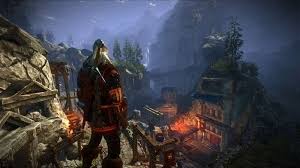
The Lost Era of AA RPG Games
One major reason The Witcher 2 feels so unique today is because it came from a different era of game development.
At the time, CD Projekt Red was not yet the global powerhouse it would later become after The Witcher 3: Wild Hunt. The studio was still growing, experimenting, and taking creative risks that many larger publishers avoided.
This “AA” development space allowed studios to build ambitious projects without the overwhelming pressure of becoming global mega-hits.
Games from that era often focused heavily on:
- Strong narrative design
- Player-driven consequences
- Unique gameplay systems
- Experimental storytelling
- Creative world-building
Unfortunately, many of these mid-budget projects have largely disappeared from today’s gaming landscape.
Modern gaming increasingly feels divided between:
- Massive AAA franchises with huge budgets
- Small indie games with limited scope
The middle ground where games like The Witcher 2 thrived has become far more difficult to sustain financially.

Modern RPGs Offer Choices—But Rarely Real Consequences
Today’s RPGs still advertise “meaningful choices,” but those choices are often far more limited than they appear.
Many modern games change dialogue, character reactions, or endings slightly, but the core structure of the game remains mostly identical regardless of player decisions.
Even critically acclaimed RPGs usually ensure that players can access nearly all content in a single playthrough.
That approach makes sense financially. Developers spend years creating environments, voice acting, cinematics, and gameplay systems. Locking large amounts of that content behind exclusive story paths can feel wasteful from a business perspective.
However, this design philosophy also reduces the impact of player agency.
In The Witcher 2, choices genuinely mattered because they forced players to sacrifice entire experiences. That sacrifice made decisions feel more personal, emotional, and memorable.
Gaming Budgets Have Changed Everything
The increase in development costs has fundamentally changed how games are made.
The original Witcher trilogy launched relatively quickly:
- The Witcher (2007)
- The Witcher 2 (2011)
- The Witcher 3 (2015)
Today, modern AAA RPG development cycles often stretch across six to eight years or more.
Games now require:
- Photorealistic graphics
- Motion capture performances
- Massive open worlds
- Advanced AI systems
- Online infrastructure
- Cross-platform optimization
All of these features increase development costs dramatically.
Because of that, publishers become far less willing to gamble on experimental storytelling systems that could potentially limit content visibility for players.
Could A Game Like The Witcher 2 Still Succeed Today?
Ironically, many players today actually crave the kind of focused storytelling that The Witcher 2 delivered.
As open-world fatigue becomes more common, some gamers are beginning to prefer shorter, denser, and more reactive RPG experiences instead of massive endless maps filled with repetitive activities.
Search trends for phrases like:
- best story RPG games
- single-player fantasy RPG
- immersive narrative games
- RPG choices matter
- high-end gaming PC RPG
continue to grow in 2026.
This suggests there is still strong demand for narrative-focused role-playing games that prioritize meaningful decisions over sheer scale.
However, the financial realities of modern AAA development make it difficult for large studios to fully commit to that approach.
The Legacy of The Witcher 2 in 2026
More than fifteen years later, The Witcher 2 remains one of the boldest RPGs ever made—not because of its graphics or combat system, but because it trusted players to live with their choices.
Its willingness to divide content, reshape the narrative, and fully commit to branching storylines created an experience that still feels rare in today’s gaming market.
While modern RPGs continue pushing technological boundaries, few have matched the courage of The Witcher 2’s design philosophy.
For many longtime RPG fans, that’s exactly why the game continues to be remembered as one of CD Projekt Red’s most ambitious achievements.
Final Thoughts
The Witcher 2 represents a unique moment in gaming history—a time when ambitious mid-budget RPGs could still take massive creative risks without needing to satisfy gigantic corporate expectations.
In 2026, the industry has changed dramatically. Development costs are higher, publishers are more cautious, and player engagement systems dominate modern design philosophies.
Yet despite all those changes, The Witcher 2 still stands as proof that meaningful player choice can create unforgettable experiences that last for decades.
And perhaps that’s why so many gamers still look back at it as one of the greatest RPGs ever created.