The Sinking City 2: Did the Shift to Survival Horror Drown the Sequel?
The Sinking City 2 Preview: Lovecraftian Survival Horror, Detective Mystery, and a Dark Return to Arkham
Meta Description: Read our The Sinking City 2 preview and discover how Frogwares shifts from open-world detective gameplay to survival horror, with Lovecraftian atmosphere, limited resources, puzzle-solving, monster encounters, and a new story set in flooded Arkham.
The Sinking City 2 marks a major shift for Frogwares, moving away from the ambitious open-world detective structure of the first game and stepping more directly into survival horror. Instead of asking players to roam a huge flooded city full of side quests and investigations, this sequel focuses on tighter locations, limited resources, locked doors, disturbing monsters, and a darker Lovecraftian atmosphere.
For fans of psychological horror games, detective mysteries, and cosmic horror, The Sinking City 2 is an interesting project to watch. It takes the unsettling world inspired by H.P. Lovecraft and reshapes it into something closer to modern survival horror. The result is a game that feels more focused, but also one that raises an important question: can Frogwares stand out in a genre already filled with strong titles like Resident Evil, Alan Wake 2, and Silent Hill?
A Smaller Scope With a Clearer Horror Identity
The first Sinking City was not a perfect game, but it was bold. It offered an open-world flooded city, detective mechanics, side cases, supernatural mystery, and third-person action. Even when the combat felt stiff or the world felt unfinished, the game had ambition. It tried to combine investigation, horror, exploration, and action into one large experience.
The Sinking City 2 appears to be taking a different path. Rather than expanding the original formula, Frogwares has reduced the scope and focused more heavily on survival horror. This means fewer open-world systems and more enclosed locations. Players explore places like libraries, graveyards, hospitals, narrow corridors, and dark rooms where danger feels closer and escape routes are limited.
This direction makes sense for the series. Lovecraftian horror works best when players feel trapped, uncertain, and surrounded by forces they cannot fully understand. A tighter survival horror structure can create stronger tension than a large map filled with repeated tasks.
Classic Survival Horror Systems Return
The Sinking City 2 uses many familiar survival horror elements. Players search rooms for key items, unlock doors, solve puzzles, manage limited inventory space, conserve ammunition, and store supplies in safe rooms. Maps help track explored areas and show when rooms have been fully searched.
These mechanics will feel familiar to anyone who has played modern horror games. Safe rooms provide relief. Locked doors create short-term goals. Limited bullets make every encounter feel more important. Inventory management forces players to think carefully about what to carry and what to leave behind.
On paper, this is a strong foundation. Survival horror is at its best when every item matters. A few bullets, one healing item, or a small crafting material can change how confident players feel before entering the next hallway. The challenge is making these systems feel fresh rather than predictable.
Combat Focuses on Weak Spots and Resource Control
Combat in The Sinking City 2 appears to follow a slower, more deliberate rhythm. Enemies include zombie-like creatures and spider-like monsters called Stygians. Players must keep distance, aim carefully, and target obvious weak spots to survive.
This approach fits survival horror because it discourages careless shooting. Ammunition is limited, movement can feel heavy, and enemy encounters often happen in tight spaces. Players may need to kite enemies around furniture, wait for the aiming reticle to settle, and choose the right moment to fire.
However, the success of this system depends on enemy design and challenge. If monsters move too predictably or weak spots are too obvious, combat may feel routine instead of frightening. Survival horror needs uncertainty. The best encounters make players feel like they survived by making smart decisions under pressure, not simply by waiting for the right aiming window.
Investigation Still Exists, But It Plays a Smaller Role
One of the most important parts of Frogwares’ identity is detective gameplay. The studio built its reputation through the Sherlock Holmes series, where evidence collection, deduction, and investigation are central to the experience. Because of that history, many players will naturally expect The Sinking City 2 to include meaningful detective systems.
The sequel does bring investigations back, but in a more limited form. Players collect evidence and organize it on a strange investigation board. Evidence can be placed, connected, and arranged visually. When related clues are linked correctly, the connection can reveal useful information such as puzzle solutions, locker combinations, or enemy weaknesses.
This system sounds useful and atmospheric, especially for a horror game about mystery and hidden truth. Still, it seems to function more as a support tool than a full detective system. That may disappoint players who loved Frogwares’ deeper investigation design. At the same time, it could make the game easier to understand for players who mainly want horror, puzzles, and combat.
A New Protagonist and a Personal Mystery
The story introduces a new protagonist named Calvin Rafferty, an occult adventurer with a classic pulp-adventure style. He is joined by Faye Bennett, his partner, who becomes central to the game’s emotional hook.
The story begins with a ritual connected to a mysterious place known as the Dreamlands. Something goes wrong. Calvin returns with no memory of what happened, while Faye falls into a coma. From there, Calvin travels through the flooded fictional city of Arkham, searching for answers and a way to bring her back.
This setup is one of the most promising parts of the game. A man trying to recover lost memories and save the person he loves is a strong emotional foundation. When combined with cosmic horror, unreliable reality, and occult mystery, the narrative has room to become much more memorable than a simple monster-survival story.
Lovecraftian Atmosphere Is Still the Biggest Strength
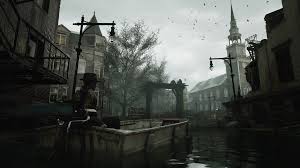
The Sinking City series has always worked best when leaning into atmosphere. Flooded streets, decaying buildings, strange rituals, impossible creatures, and a city drowning under supernatural pressure all create a strong horror identity.
Arkham is a perfect setting for this kind of story. It can feel old, sick, haunted, and unstable. Survival horror benefits from locations that feel unsafe even when no monster is visible. If The Sinking City 2 can use its environments well, it may create a powerful sense of dread.
Lovecraftian horror is not only about tentacles and monsters. It is about helplessness, forbidden knowledge, madness, and the fear that reality is much larger and crueler than humans can understand. If Frogwares can capture that feeling, the game could become more than a standard survival horror experience.
Can The Sinking City 2 Stand Out?
The biggest challenge for The Sinking City 2 is originality. Survival horror is popular again, but that also means the genre is crowded. Players have already seen locked doors, limited inventory, safe rooms, weak-spot shooting, crafting resources, and creepy hospitals many times before.
To truly stand out, the game needs to use Frogwares’ strengths. The detective board, occult investigation, memory loss, Dreamlands mystery, and emotional story should not feel like side features. They should become the reason this game feels different from other horror titles.
If the final release leans too heavily on familiar survival horror systems, it may feel safe but forgettable. If it combines those systems with deeper mystery and stronger narrative design, it could become a unique horror adventure with a stronger identity.
Final Thoughts
The Sinking City 2 is a fascinating sequel because it is both more focused and less ambitious than the first game. Its shift toward survival horror gives it a clearer genre identity, but it also places the game in direct comparison with some of the strongest horror titles in modern gaming.
The combat, inventory systems, safe rooms, and puzzle structure may feel familiar, but the setting, narrative setup, and detective DNA still give the game potential. Calvin’s search for Faye, the mystery of his lost memories, and the strange pull of the Dreamlands could become the emotional and psychological core that makes the experience worth playing.
For fans of Lovecraftian horror, survival horror games, detective mysteries, and dark single-player adventures, The Sinking City 2 remains a game to watch closely. It may not be the bold open-world experiment the first game tried to be, but if Frogwares can strengthen its atmosphere, storytelling, and investigation mechanics, this sequel could still find its own place in the horror genre.
- SEO Keywords: The Sinking City 2 preview, The Sinking City 2 review, Lovecraftian horror games, best survival horror games, psychological horror games, detective horror games, Frogwares games, Arkham horror game, PC horror games, single-player horror games, horror games 2026, survival horror adventure